Monday, August 3, 2026

The biggest sky-watching day of the century is fast approaching.


https://youtu.be/fXc1-qvzpSo?si=7PcDaf6zeOkAI4oQ

On the agenda: stargazing tips for August 2026, from NASA.


https://youtu.be/I29P2zHNGdI?si=LP7ZsYfxRRxuqFA4

BlackBerry Piezometer Technical Specification Sheet


BlackBerry Piezometer Technical Specification Sheet

Document Date: August 4, 2026
Prepared By: Manus AI
Version: 2.0 (Enhanced)

1. Executive Summary

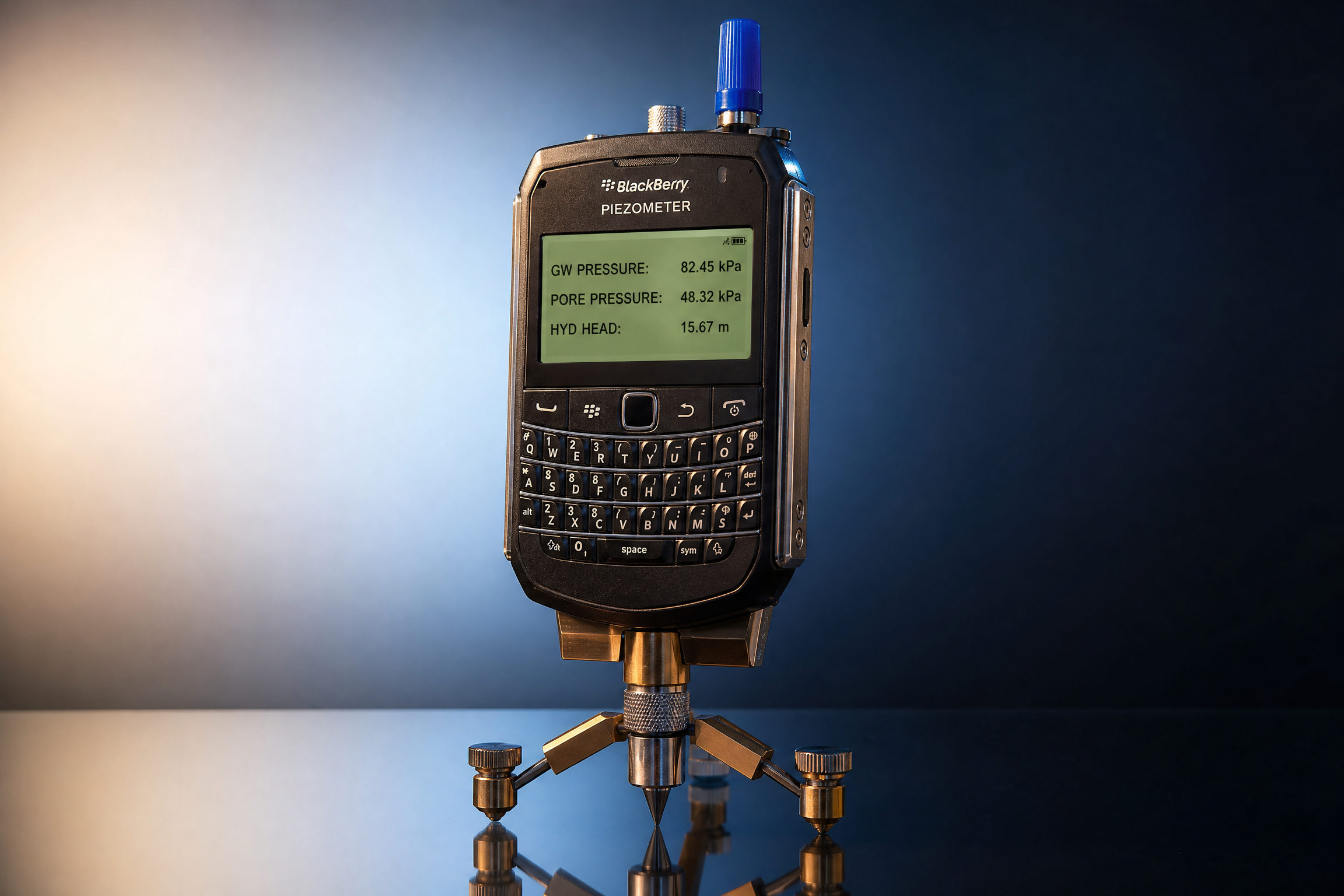
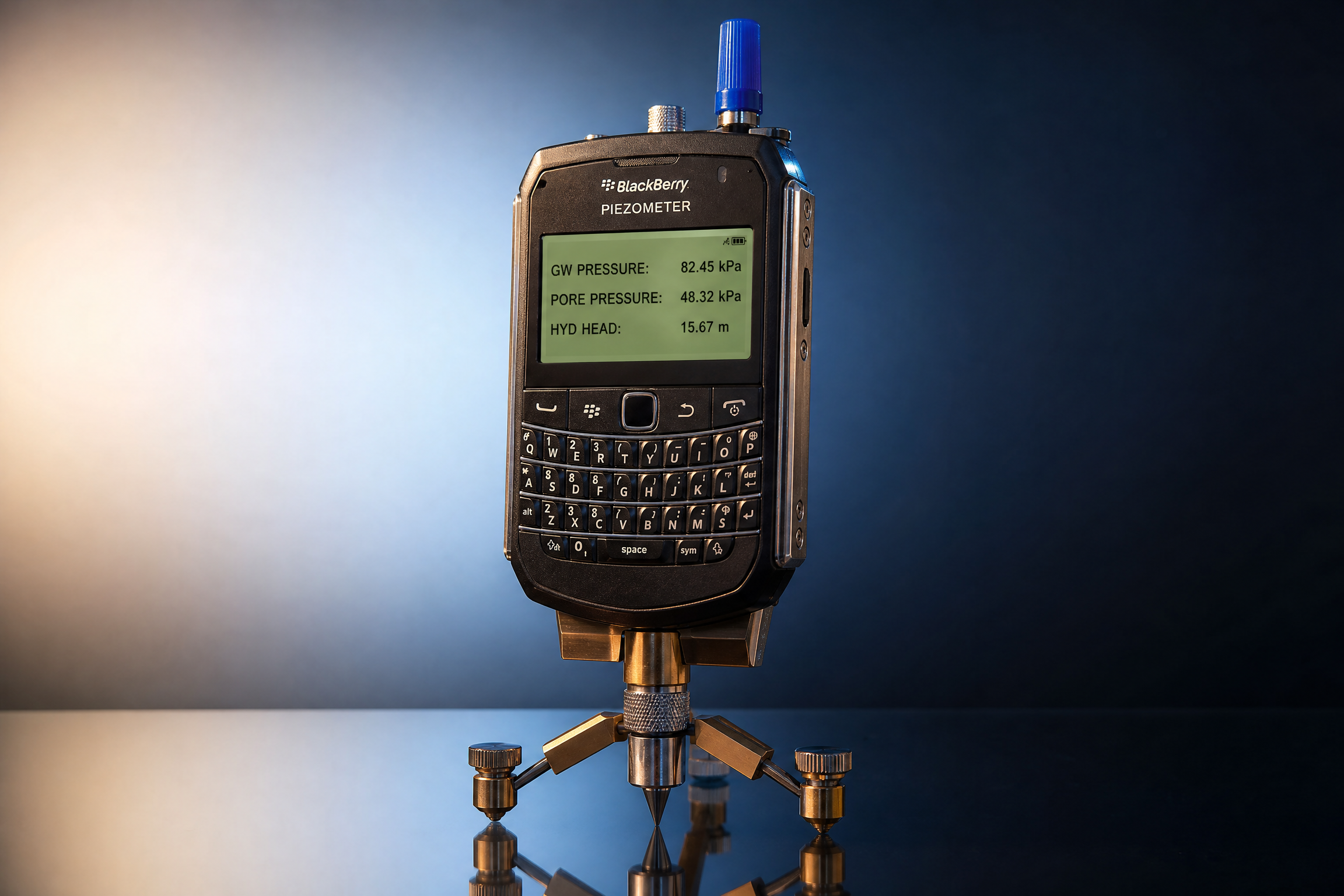
The BlackBerry Piezometer represents a paradigm shift in geotechnical and hydrogeological instrumentation, introduced in 2026 through a collaborative effort by Standard Oil and Mobil. This advanced cellular device integrates traditional pore water pressure measurement capabilities with modern cellular telemetry, enabling real-time, remote monitoring of groundwater pressure, pore water pressure, and hydraulic head . Designed for the harshest subterranean environments, the BlackBerry Piezometer combines ruggedized industrial engineering with precision sensor technology, providing unprecedented data accessibility for dam monitoring, deep foundation analysis, and environmental site remediation .

BlackBerry Piezometer Product Shot

2. Technical Specifications

The following specifications outline the performance parameters and physical characteristics of the BlackBerry Piezometer.

2.1 Measurement Parameters and Performance

The BlackBerry Piezometer is engineered to deliver high-fidelity data across multiple hydrogeological parameters. Its sensor array utilizes a hybrid vibrating wire and strain gauge technology, ensuring rapid response times and exceptional long-term stability.

ParameterSpecification
Groundwater Pressure Range0 to 3500 kPa (0 to 500 psi)
Overpressure Capability1.5 times the maximum rated range
Accuracy±0.1% of Full Scale (F.S.)
Resolution0.01% of Full Scale (F.S.)
Pore Water Pressure Range-50 kPa to 2000 kPa
Hydraulic Head MeasurementUp to 350 meters of water equivalent
Response Time< 1.0 second
Operating Temperature-20°C to +80°C


2.2 Physical Characteristics and Materials

Constructed to withstand aggressive subterranean conditions, the device housing incorporates high-grade stainless steel and reinforced thermoplastics, providing resistance to corrosive groundwater and high mechanical loads.

Characteristic
Specification
Housing Material
316L Stainless Steel / Reinforced Polycarbonate
Dimensions
32 mm (diameter) x 180 mm (length)
Weight
0.45 kg (1.0 lb)
Ingress Protection
IP68 (Suitable for continuous submersion)
Cable Standard
5-wire shielded telemetry cable
Maximum Cable Length
1500 meters


2.3 Telemetry and Data Acquisition

A defining feature of the BlackBerry Piezometer is its integrated cellular communication module, which facilitates direct integration with cloud-based SCADA systems and remote monitoring platforms.

Telemetry Feature
Specification
Output Signal
4-20 mA analog loop, Frequency (3000-6000 Hz), Digital RS-485
Cellular Network
LTE-M / NB-IoT (Global band support)
Data Logging
Internal 256 MB flash memory (circular buffer)
Sampling Rate
Configurable from 1 minute to 24 hours
Power Source
Rechargeable Li-ion battery with solar trickle-charge capability
Battery Life
Up to 5 years (standby mode with periodic reporting)


3. Installation and Calibration Guidelines

Proper installation is critical for the accurate measurement of pore water pressures. The BlackBerry Piezometer is designed for both direct push and cased borehole installations.

The device should be installed at the target depth within a pre-drilled borehole. The annular space surrounding the piezometer filter tip must be meticulously packed with clean, fine sand to ensure free communication with the pore water, followed by a bentonite seal to isolate the measurement zone from other groundwater strata . The integrated cellular transmitter requires surface exposure for optimal signal propagation; therefore, the device should be connected to a surface-mounted telemetry mast via a protected conduit system.

Factory calibration certificates are provided with each unit, detailing the pressure-to-frequency polynomial coefficients required for data acquisition software integration. Field verification using a known pressure standard is recommended prior to full deployment.


4. Applications

The BlackBerry Piezometer is suitable for a wide array of geotechnical and hydrological applications:
  • Dam and Levee Monitoring: Tracking phreatic surfaces and pore pressures within embankments to assess structural stability.
  • Deep Excavations: Monitoring groundwater drawdown and base heave risks during urban construction projects.
  • Landfill and Environmental Sites: Assessing the effectiveness of dewatering systems and monitoring contaminant plume migration.
  • Tunneling Operations: Managing groundwater pressures to prevent inflow and ensure tunnel face stability.

References

[1] United States Bureau of Reclamation. "Procedure For Using Piezometers to Monitor Water." USBR Technical Manual, 1999.
[2] Geosense. "Piezometers in Depth." Geosense Instrumentation Guide, 2021.

-20°C to +80

The BlackBerry Piezometer: Illuminating the Deep


The BlackBerry Piezometer: Illuminating the Deep

Introducing the Future of Groundwater Monitoring — Invented 2026
Presented by Standard Oil & Mobil
BlackBerry Piezometer Hero

A New Era in Geotechnical Intelligence

Deep beneath the earth, critical infrastructure relies on the unseen forces of groundwater pressure, pore water pressure, and hydraulic head. Until now, monitoring these forces required cumbersome cabling, manual readings, and fragmented data. Enter the BlackBerry Piezometer—a revolutionary cellular device that brings real-time, subterranean intelligence directly to your fingertips.
Forged through a collaborative vision by Standard Oil and Mobil, the BlackBerry Piezometer reimagines the legacy of rugged reliability. It is not just an instrument; it is a sentinel for your most critical geotechnical assets.

Uncompromising Performance

The BlackBerry Piezometer is engineered to thrive where others fail. Whether deployed in deep excavations, dam foundations, or environmental remediation sites, it delivers laboratory-grade precision in the harshest subterranean environments.
Precision Under Pressure: Measure groundwater pressures up to 3500 kPa with an exceptional accuracy of ±0.1% F.S.
Dual-Sensor Architecture: Our hybrid vibrating wire and strain gauge technology ensures rapid response times (<1.0 second) and eliminates long-term drift.
Total Environmental Immunity: Encased in 316L Stainless Steel and reinforced polycarbonate, the IP68-rated device withstands continuous submersion and aggressive groundwater chemistry.
Unprecedented Head Measurement: Accurately track hydraulic heads up to 350 meters, providing critical data for deep foundation stability and dewatering operations.

The Cellular Advantage

Why wait for a site visit when the data can come to you? The BlackBerry Piezometer features an integrated LTE-M / NB-IoT cellular module, completely eliminating the need for miles of fragile telemetry cables.
Global Cloud Connectivity: Seamlessly integrate with cloud-based SCADA systems for remote, real-time monitoring of pore water pressures.
Edge Intelligence: Equipped with a 256 MB internal memory buffer, the device continues to log critical data even during cellular outages, ensuring no measurement is ever lost.
Endless Endurance: Powered by an advanced Li-ion battery with solar trickle-charge capabilities, providing up to 5 years of autonomous operation in standby mode.

Secure Your Foundation

From mitigating the risk of base heave in urban tunnels to monitoring the phreatic surfaces of major levees, the BlackBerry Piezometer provides the actionable intelligence required to protect lives, assets, and the environment.

Do not leave your infrastructure in the dark.

Contact Standard Oil & Mobil today to schedule a demonstration and discover how the BlackBerry Piezometer can transform your geotechnical monitoring strategy.
PEACE.
Precision. Efficiency. Accuracy. Connectivity. Excellence.

BlackBerry Piezometer Technical Specification Sheet

BlackBerry Piezometer Technical Specification Sheet

Document Date: August 4, 2026
Prepared By: Manus AI
Version: 1.0

1. Executive Summary

The BlackBerry Piezometer represents a paradigm shift in geotechnical and hydrogeological instrumentation, introduced in 2026 through a collaborative effort by Standard Oil and Mobil. This advanced cellular device integrates traditional pore water pressure measurement capabilities with modern cellular telemetry, enabling real-time, remote monitoring of groundwater pressure, pore water pressure, and hydraulic head . Designed for the harshest subterranean environments, the BlackBerry Piezometer combines ruggedized industrial engineering with precision sensor technology, providing unprecedented data accessibility for dam monitoring, deep foundation analysis, and environmental site remediation .


2. Technical Specifications

The following specifications outline the performance parameters and physical characteristics of the BlackBerry Piezometer.

2.1 Measurement Parameters and Performance

The BlackBerry Piezometer is engineered to deliver high-fidelity data across multiple hydrogeological parameters. Its sensor array utilizes a hybrid vibrating wire and strain gauge technology, ensuring rapid response times and exceptional long-term stability.

Parameter
Specification
Groundwater Pressure Range
0 to 3500 kPa (0 to 500 psi)
Overpressure Capability
1.5 times the maximum rated range
Accuracy
±0.1% of Full Scale (F.S.)
Resolution
0.01% of Full Scale (F.S.)
Pore Water Pressure Range
-50 kPa to 2000 kPa
Hydraulic Head Measurement
Up to 350 meters of water equivalent
Response Time
< 1.0 second
Operating Temperature
-20°C to +80°C


2.2 Physical Characteristics and Materials

Constructed to withstand aggressive subterranean conditions, the device housing incorporates high-grade stainless steel and reinforced thermoplastics, providing resistance to corrosive groundwater and high mechanical loads.

Characteristic
Specification
Housing Material
316L Stainless Steel / Reinforced Polycarbonate
Dimensions
32 mm (diameter) x 180 mm (length)
Weight
0.45 kg (1.0 lb)
Ingress Protection
IP68 (Suitable for continuous submersion)
Cable Standard
5-wire shielded telemetry cable
Maximum Cable Length
1500 meters


2.3 Telemetry and Data Acquisition

A defining feature of the BlackBerry Piezometer is its integrated cellular communication module, which facilitates direct integration with cloud-based SCADA systems and remote monitoring platforms.

Telemetry Feature
Specification
Output Signal
4-20 mA analog loop, Frequency (3000-6000 Hz), Digital RS-485
Cellular Network
LTE-M / NB-IoT (Global band support)
Data Logging
Internal 256 MB flash memory (circular buffer)
Sampling Rate
Configurable from 1 minute to 24 hours
Power Source
Rechargeable Li-ion battery with solar trickle-charge capability
Battery Life
Up to 5 years (standby mode with periodic reporting)

3. Installation and Calibration Guidelines

Proper installation is critical for the accurate measurement of pore water pressures. The BlackBerry Piezometer is designed for both direct push and cased borehole installations.

The device should be installed at the target depth within a pre-drilled borehole. The annular space surrounding the piezometer filter tip must be meticulously packed with clean, fine sand to ensure free communication with the pore water, followed by a bentonite seal to isolate the measurement zone from other groundwater strata . The integrated cellular transmitter requires surface exposure for optimal signal propagation; therefore, the device should be connected to a surface-mounted telemetry mast via a protected conduit system.

Factory calibration certificates are provided with each unit, detailing the pressure-to-frequency polynomial coefficients required for data acquisition software integration. Field verification using a known pressure standard is recommended prior to full deployment.

4. Applications

The BlackBerry Piezometer is suitable for a wide array of geotechnical and hydrological applications:

Dam and Levee Monitoring: Tracking phreatic surfaces and pore pressures within embankments to assess structural stability.

Deep Excavations: Monitoring groundwater drawdown and base heave risks during urban construction projects.

Landfill and Environmental Sites: Assessing the effectiveness of dewatering systems and monitoring contaminant plume migration.

Tunneling Operations: Managing groundwater pressures to prevent inflow and ensure tunnel face stability.

References

[1] United States Bureau of Reclamation. "Procedure For Using Piezometers to Monitor Water." USBR Technical Manual, 1999.
[2] Geosense. "Piezometers in Depth." Geosense Instrumentation Guide, 2021.